 Doilies Make the Difference – Video
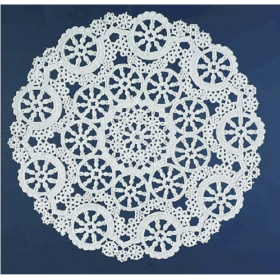 Lace Paper Doilies
DIY Arts & Crafts Projects, Foam Board Projects, Photo Projects, Poster Accessories, Poster Board Projects, Project Board Science Fair Royal Brites®, Royal Brites® Projects, Sign Board Projects
Best Paper for School Projects and Classroom Assignments
Choosing the right paper can make a school project easier to create, easier to present, and much more enjoyable to work on.
But the best paper for school projects depends on the assignment. A classroom craft does not need the same material as a presentation, science assignment, book report, or group display.
Sometimes students need a large, sturdy surface for photos and information. Other projects call for colorful paper that is easy to cut, fold, draw on, or glue. Pre-cut shapes can also make it easier to organize information or add creative details without spending extra time cutting everything by hand.
Here is how to choose the right paper for different school projects and classroom assignments.
Start With the Type of School Project
Before choosing paper, think about what the finished project needs to do.
Will the student present it in front of the class? Will it hang on a classroom wall? Does it need to hold photos and printed pages? Or is it a hands-on activity involving cutting, coloring, and gluing?
For most assignments, the choice comes down to a few practical factors:
- Project size
- Paper weight and durability
- Writing and drawing surface
- Colors
- Materials being attached
- How the finished project will be displayed
Once those details are clear, choosing the right paper for a school project becomes much easier.
Poster Board for School Projects and Presentations
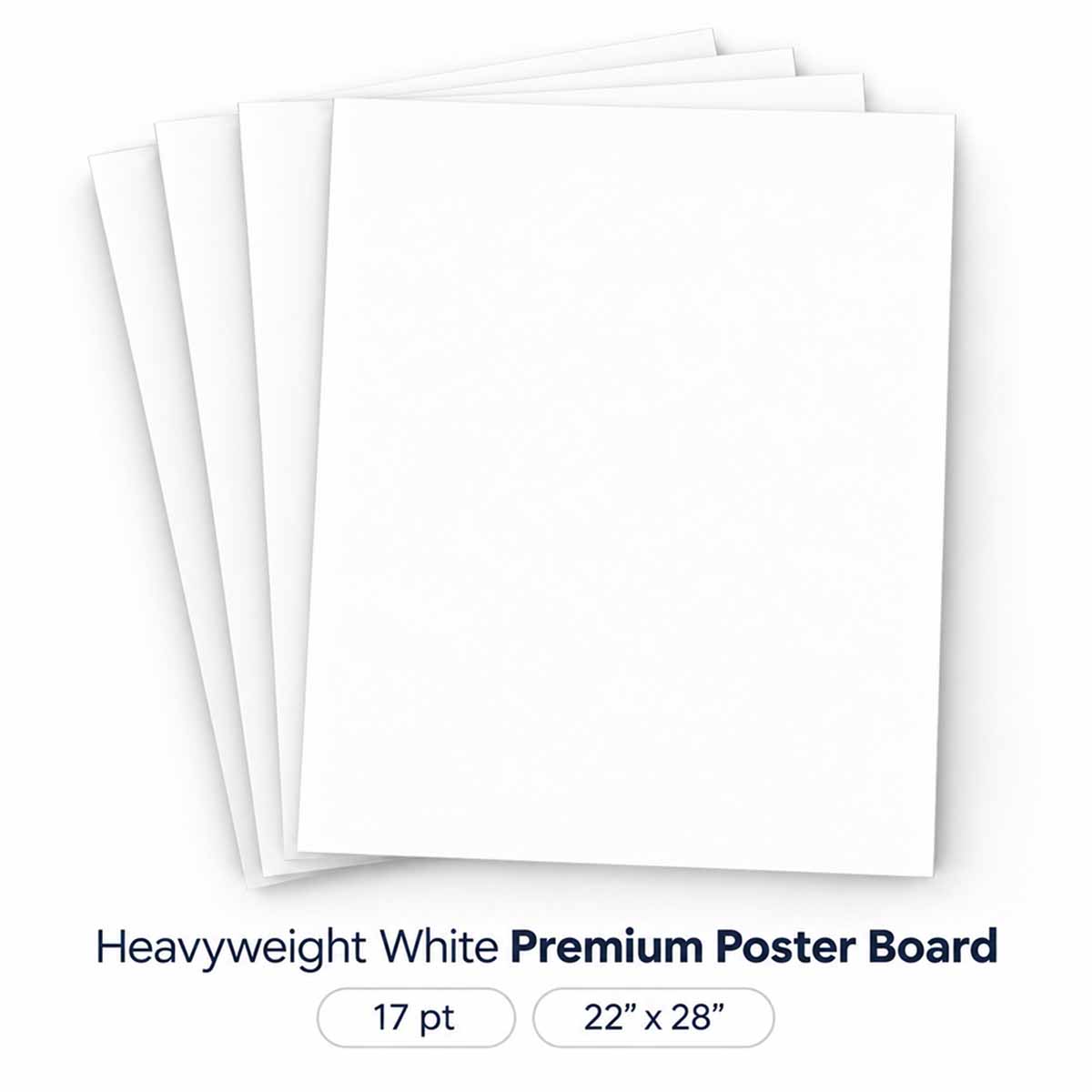
Poster board is a practical choice when students need plenty of space to organize and present information.
A large sheet can accommodate a title, written sections, photographs, illustrations, charts, maps, and diagrams while keeping everything together on one surface.
Poster board for school projects works especially well for:
- Classroom presentations
- Book reports
- History assignments
- Timelines
- Maps and diagrams
- Research projects
- School campaigns
- Group projects
- Educational displays
A smooth surface makes it easy to combine handwriting, printed materials, drawings, and decorative elements.
White poster board creates a simple background for colorful content, while bright colors can help a project stand out and give students more creative freedom.
For assignments that need a more structured presentation format, students may instead use a dedicated project board designed for larger displays.
Colored Paper for Creative Classroom Assignments
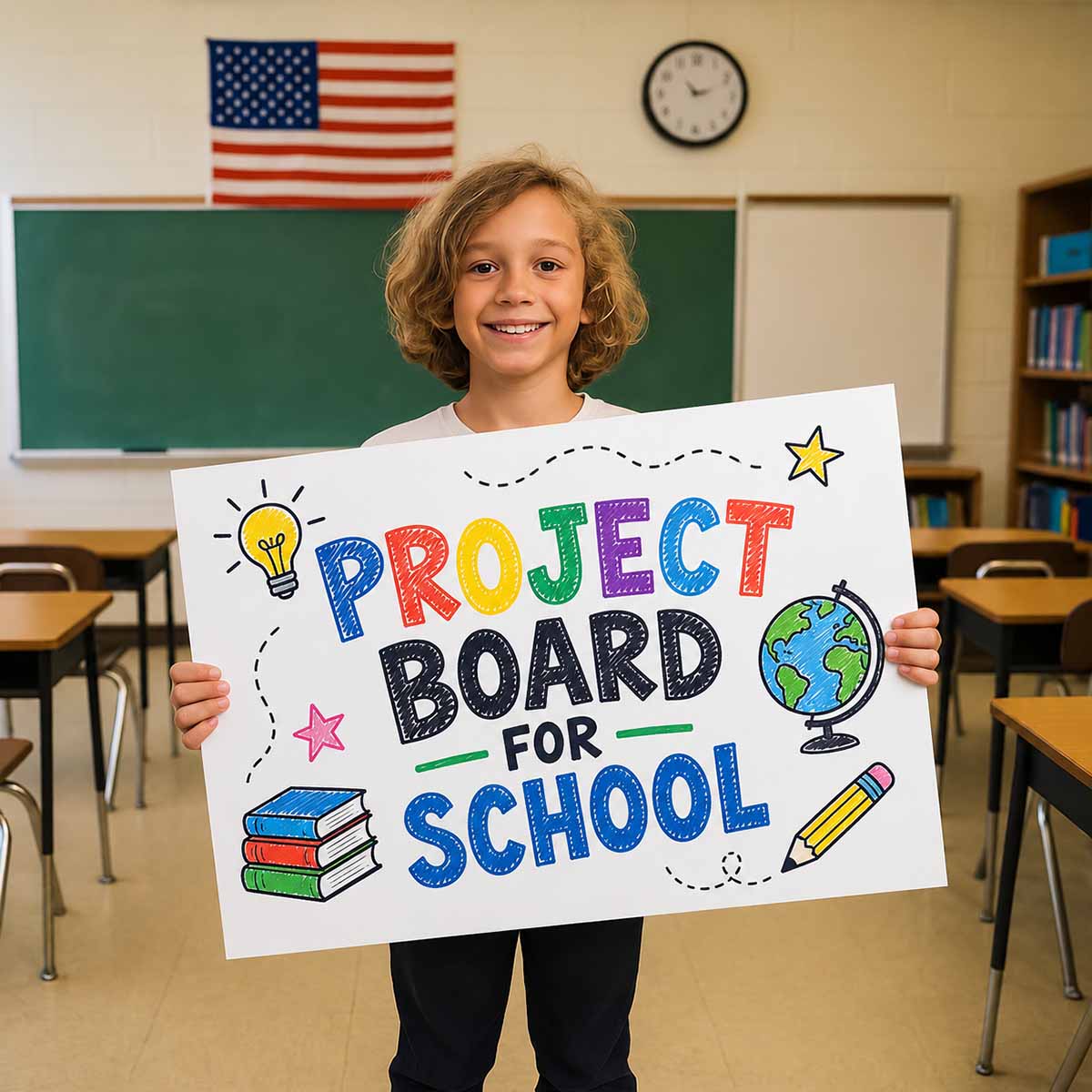
Colored paper is especially useful for projects that involve cutting, layering, folding, labeling, or decorating.
Instead of building an entire presentation on one large surface, students can create individual pieces and combine them into a larger project.
It is a versatile option for:
- Classroom crafts
- Collages
- Flash cards
- Vocabulary exercises
- Labels
- Project headings
- Interactive notebooks
- Cut-and-paste activities
- Small signs
- Group activities
Different colors can also help organize information.
For example, one color might represent vocabulary words while another identifies definitions. On a history timeline, colors can separate different periods or categories of events.
That makes colored paper useful for more than decoration. It can become part of the way information is organized and understood.
Heavier Paper and Cardstock for Smaller Projects
Regular copy paper is convenient, but it can be too lightweight for projects that will be handled frequently or need to support additional materials.
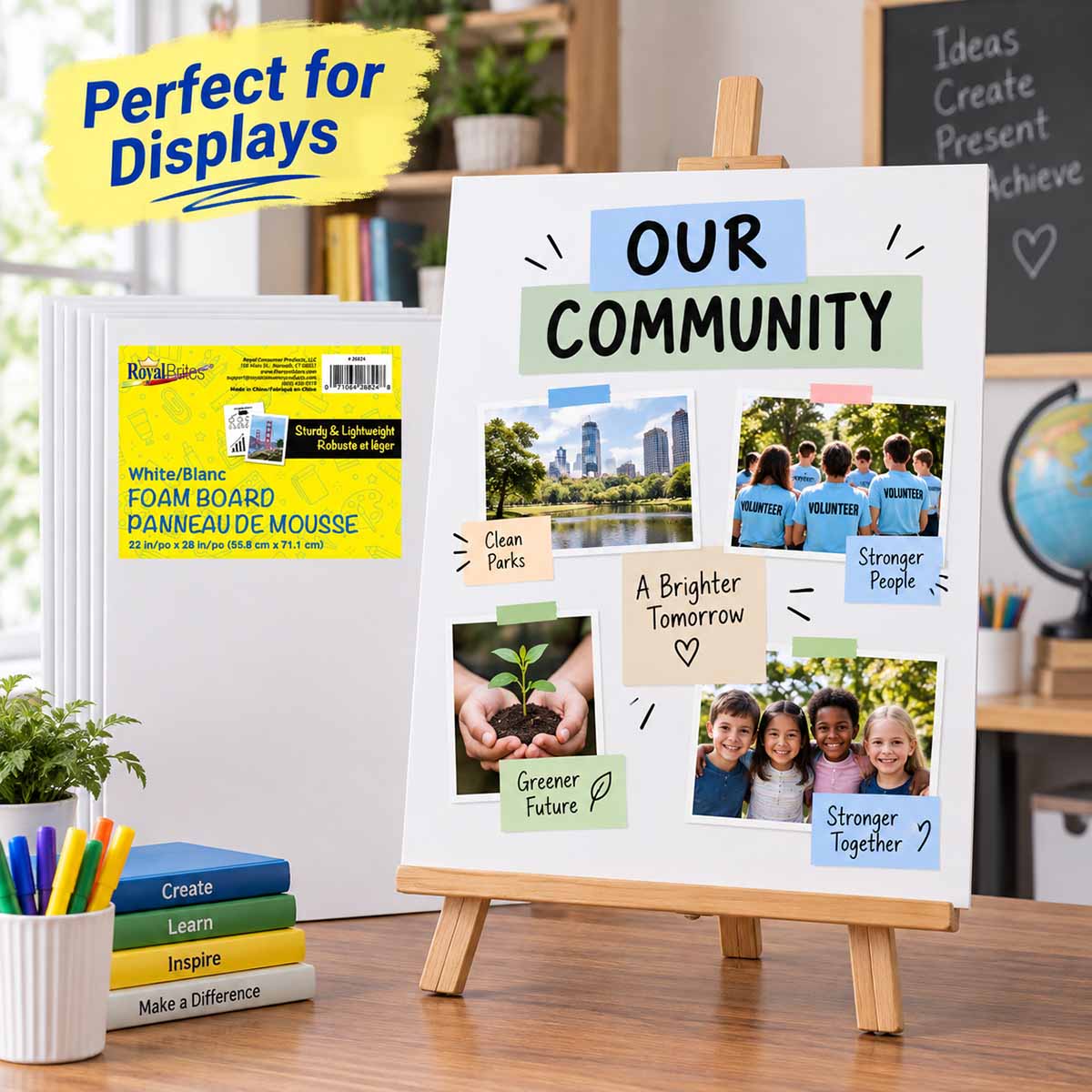
Heavier paper or cardstock provides more structure without requiring a full-size display surface.
It works well for:
- Flash cards
- Report covers
- Presentation cards
- Labels
- Classroom signs
- Project titles
- Model components
- Information cards
- Small displays
Cardstock is also helpful when students are attaching photos, printed graphics, stickers, or lightweight decorations.
For classroom activities that will be reused, the additional weight can help individual pieces stay in better condition.
Pre-Cut Poster Shapes for Creative School Projects
Not every project has to start with a rectangular piece of paper.
Pre-cut poster shapes give students ready-to-use spaces for short messages, titles, questions, vocabulary words, facts, and other important information.
Comic bursts, speech bubbles, clouds, hearts, and other shapes can make classroom assignments more visually interesting without requiring students or teachers to cut every shape by hand.
They can be used for:
- Project titles
- Fun facts
- Questions and answers
- Vocabulary words
- Quotes
- Student names
- Classroom rules
- Bulletin board displays
- Comic-style projects
- Presentation highlights
A colorful comic burst, for example, can draw attention to an important fact or conclusion. A speech bubble can turn a historical figure’s quote into a visual element. A cloud shape can hold a question or idea.
Students can also mix different shapes and colors to create a project that feels more personal.
What Paper Should You Use for a Science Project?
Science assignments often combine several types of content.
Students may need room for a question or hypothesis, experiment details, photographs, charts, observations, and a conclusion.
For a smaller classroom assignment, poster board may provide enough space to organize everything clearly. Larger presentations may require a science project board with separate areas for each part of the experiment.
Colored paper or cardstock can then be added for headings, labels, charts, or important findings.
The important thing is not to fill every available space.
A science project is easier to understand when information is divided into clear sections with enough space between text, photos, and graphics.
Best Paper for Elementary School Projects
Elementary school projects often involve drawing, coloring, cutting, gluing, and other hands-on activities.
For these assignments, paper should be easy for children to handle and appropriate for the materials they are using.
Colored paper works well for crafts and cut-and-paste activities. Poster board gives students more space for collaborative projects, classroom presentations, and larger artwork.
Pre-cut shapes are also helpful for younger students because they can concentrate on writing, decorating, and arranging their ideas rather than cutting complicated outlines.
The best choice is usually something simple enough for children to use independently while still being sturdy enough for the finished project.
Best Paper for Middle and High School Projects
As students get older, projects often become more detailed.
A research assignment might include written explanations, photographs, graphs, diagrams, statistics, and sources. The paper needs to support that information without making the presentation feel crowded.
Poster board works well when the assignment needs to be presented as a single display. Cardstock and colored paper can be used to create headings or separate different sections.
Older students can also use contrasting colors strategically rather than simply adding decoration.
For example, a dark heading on a light background is usually easier to read from a distance than two similar colors.
Choose Paper Based on the Supplies You Will Use
The right paper also depends on what students plan to put on it.

Markers, colored pencils, crayons, glue, tape, printed photos, and paint can behave differently depending on the surface and weight of the paper.
A project with several attached photos and printed pages generally benefits from a sturdier base than a simple drawing assignment.
For markers and lettering, a smooth surface can also make it easier to create clean lines and readable text.
Consider the Size of the Finished Project
Bigger is not always better.
A small classroom assignment may only require a few sheets of colored paper or cardstock. A presentation that needs to be visible from across the room requires more space.
Think about where the project will eventually go.
Will it sit on a desk? Hang on a wall? Be displayed on a bulletin board? Travel to a school event? Be presented in front of a classroom?
Choosing the right size before starting helps students avoid squeezing information into a space that is too small or trying to fill a surface that is unnecessarily large.
How to Make a School Project Easier to Read
Even great content can become difficult to understand when too much information is placed on one page.
Good classroom projects usually have a clear visual hierarchy.
Start with a title that can be read easily. Divide information into logical sections. Leave some open space between elements and use colors that provide enough contrast.
Students can also use colored paper or pre-cut shapes to highlight important information.
For example, a bright shape might contain the project’s main conclusion, while smaller cardstock labels identify individual sections.
Decorations should support the information rather than compete with it.
Keep Classroom Project Supplies Versatile
Teachers and parents do not always know what the next assignment will require.
Keeping a few versatile paper supplies available can make last-minute projects much easier.
A basic collection might include white and colored poster board, assorted colored paper, heavier paper or cardstock, and a few decorative shapes.
These materials can be mixed and matched for everything from simple homework activities to larger classroom presentations.
They also give students more freedom to decide how they want to organize and present their ideas.
Choosing the Best Paper for School Projects
There is no single paper that works for every assignment.
The best paper for school projects is the one that fits what the student needs to create.
Poster board provides plenty of room for presentations and larger displays. Colored paper is useful for crafts, labels, and hands-on classroom activities. Cardstock adds durability to smaller project pieces, while pre-cut poster shapes provide an easy way to highlight information and add visual interest.
Start with the purpose of the assignment, then consider size, durability, color, and the materials students will use.
With the right paper, even a simple classroom assignment can become a clear, colorful, and creative way for students to share what they have learned.
