 Doilies Make the Difference – Video
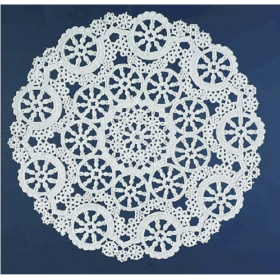 Lace Paper Doilies
Geographics Stationery
Student Award Ideas Beyond Good Grades
When schools recognize students, academic achievement is often the first thing that comes to mind. Honor roll certificates, subject awards, and high grades certainly deserve to be celebrated, but they tell only part of the story.
Every classroom also has students who make a difference in quieter ways. There is the student who helps a classmate without being asked, the one who keeps working after a difficult start, the natural leader who brings a group together, or the creative thinker who sees a problem from a completely different angle.
Those qualities may never appear on a report card, yet they are often the ones teachers remember long after the school year ends.
That is why student recognition can be much more meaningful when it goes beyond grades.
Student Award Ideas That Recognize More Than Grades
A good student award does more than acknowledge a result. It tells a student that someone noticed the effort, attitude, or character behind that result.
For one student, that may mean recognizing perseverance after weeks of improvement. For another, it could be leadership during group projects or the kindness they consistently show classmates.
Awards such as Most Improved Student, Outstanding Effort, Leadership, Kindness, or Positive Attitude work well because they focus on qualities students can continue developing throughout the school year.
They also give teachers the opportunity to recognize progress rather than perfection.
A student who begins the year struggling with reading, organization, confidence, or participation may still make enormous progress over time without becoming the highest-performing student in the class. A certificate recognizing that growth can sometimes mean more than an award based only on a final grade.
Character Can Be Worth Celebrating Too
Schools do much more than teach academic subjects. Classrooms are also places where students learn responsibility, cooperation, respect, and how to work with people who may think differently from them.
That opens the door to many thoughtful student award ideas.
A Helping Hand Award can recognize a student who regularly supports others. A Good Citizen Award may celebrate responsibility and respect, while a Community Builder Award can highlight someone who helps classmates feel included.
These awards can be especially meaningful because they tell students that the way they treat other people matters.
The wording does not need to be complicated either. In fact, a simple and specific reason often feels more personal than a formal description.
Instead of writing only “For Outstanding Character,” a teacher might add:
For always making sure everyone in the group has a chance to participate.
That small detail turns a generic certificate into something the student can immediately connect with.
Celebrate Effort, Not Just the Final Result
Some of the most important student achievements happen long before a final test score appears.
A student may spend weeks learning a difficult concept, become more confident speaking in front of the class, improve attendance, become more organized, or begin completing assignments more consistently.
Recognition helps make that progress visible.
Awards centered on effort and perseverance are especially useful because they acknowledge that learning is a process. Titles such as Growth Mindset Award, Perseverance Award, Determined Learner, or Above and Beyond Award can all be adapted to fit the personality of the classroom.
The important part is explaining why the student earned the recognition.
A certificate that says “For showing determination and continuing to improve throughout the semester” carries much more meaning than a title by itself.
Leadership Does Not Always Look the Same
When people think of student leaders, they may picture the most confident or outspoken person in the room. In reality, leadership can take many forms.
Some students lead by speaking up. Others lead by staying organized, helping a team stay focused, listening carefully, or making sure quieter classmates are included.
That means leadership awards do not need to be limited to student council presidents or team captains.
A Team Player Award, Peer Mentor Award, or Collaboration Award can recognize students who help groups work better together. A more traditional Leadership Award can still work beautifully when it includes a specific example of what the student actually did.
This makes recognition feel earned rather than generic.
Creativity Deserves a Place in Student Recognition
Creativity is another quality that can easily be overlooked when recognition focuses only on academic performance.
A creative student might be a talented artist, but creativity can also appear in science projects, writing assignments, presentations, problem solving, engineering activities, or classroom discussions.
A student who consistently approaches assignments in an original way could receive a Creative Thinker Award. Someone who loves experimenting and building might enjoy a Future Inventor Award, while a strong writer could be recognized with a Storyteller Award.
These awards are particularly useful because they allow teachers to reflect the personality of the class instead of relying on the same traditional categories every year.
Curiosity Is an Achievement Too
Some students are memorable because they always want to know more.
They ask follow-up questions, make unusual connections, research topics outside the assignment, or start conversations that take the class in an unexpected direction.
That curiosity is worth recognizing.
Awards such as Curious Mind, Lifelong Learner, or Research Star can be a thoughtful way to celebrate students who genuinely enjoy learning.
Recognition like this also sends an important message: education is not only about knowing the correct answer. Asking thoughtful questions matters too.
Student Recognition Can Start Early in the School Year
Student awards do not have to wait for graduation, final grades, or a large school ceremony.
In fact, recognition can be especially valuable near the beginning of the school year, when teachers are still shaping classroom culture and students are building new routines.
A simple award for effort, kindness, participation, responsibility, or improvement can reinforce the behaviors teachers want to encourage from the start.
Recognition can become part of Student of the Month programs, classroom milestones, club activities, reading challenges, project presentations, attendance goals, or informal celebrations throughout the semester.
This also gives teachers more opportunities to recognize different students over time, rather than limiting awards to one major event.
The goal is not to hand out certificates constantly. It is to make recognition timely and specific, so students understand exactly what they did well and feel encouraged to keep going.
Make Every Student Award Personal
The certificate itself is important, but the personal details are what make an award memorable.
Whenever possible, include more than the award title and student name. Add a short explanation that connects the recognition to something the student actually did.
For example:
Leadership Award
Presented to Jordan Lee for taking initiative during group projects and helping every member of the team contribute.
Or:
Most Improved Student Award
Presented to Taylor Smith in recognition of consistent effort, determination, and outstanding progress throughout the semester.
A few extra words can completely change how an award feels.
Instead of receiving a generic certificate, the student receives proof that their effort was noticed.
Creating Student Award Certificates
Once the award ideas are chosen, presentation can be as simple or formal as the occasion requires.
Teachers can use colorful certificate designs for elementary classrooms, traditional parchment-style certificates for school recognition, or gold foil certificate designs for more formal events.
With printable certificate paper and tools such as iClicknPrint, names, award titles, dates, and personalized messages can be added before printing. This makes it easier to create a consistent set of certificates while still giving each student individual recognition.
For more formal presentations, adding a certificate holder or coordinating seal can make the recognition feel even more special.
The goal is not necessarily to make the certificate elaborate. It is to make the recognition feel intentional.
Recognition Can Happen All Year Long
Student recognition becomes more meaningful when it is connected to real progress and real moments.
Teachers can acknowledge achievements during monthly classroom programs, semester milestones, reading challenges, science projects, club activities, sports events, school assemblies, or simply after a student reaches a goal they have been working toward.
This approach also makes recognition more inclusive.
Instead of waiting until the end of the school year and rewarding only a small group of students, teachers can notice different strengths at different moments throughout the year.
A student who improves dramatically in October may deserve recognition in October. Someone who becomes a stronger classroom leader in January can be celebrated then.
Recognition feels more powerful when it is timely.
More Than a Grade
Grades will always be an important way to measure academic achievement, and students who work hard for excellent results deserve to have that effort celebrated.
But classrooms are filled with other achievements too.
Students become more confident. They learn to collaborate, help one another, take creative risks, recover from setbacks, ask better questions, and discover strengths they did not know they had.
The best student awards recognize those moments as well.
When a student receives a certificate for something specific and personal, the message is simple:
Someone noticed.
And sometimes that is the recognition students remember most.
